Tracking pollution and restoring wetlands in Fort Portal
Uganda – The presence of small “creatures” such as larvae or snails tells us at least as much about the quality of river water as a laboratory analysis of a water sample. That is what the inhabitants of the wetlands in Fort Portal have learned. Our partner KFF is conducting research with them.
Join For Water is working with its partners in Fort Portal to restore the wetlands in this city. Part of this restoration involves improving the health of streams that have been affected by silting, pollution, and poor land-use practices.
Water quality monitoring is being carried out by KFF, the Kyaninga Forest Foundation, with the support of the Conrad N. Hilton Foundation and Join For Water.
No clean drinking water
Many streams in Fort Portal City have been heavily affected by soil erosion, waste disposal, and runoff from settlements. As wetlands degrade, water becomes polluted, plant and animal life deteriorate, and communities downstream face challenges in accessing clean water. Over 3,000 people living near these streams are directly affected, especially households adjacent to the wetlands as they fail to access clean water for both domestic use and farming.
To address these issues, KFF has begun regularly sampling 17 selected watercourses, such as Mugunu, Nyabukara, Nyakasura, Nyakimya, Wamikira and others.
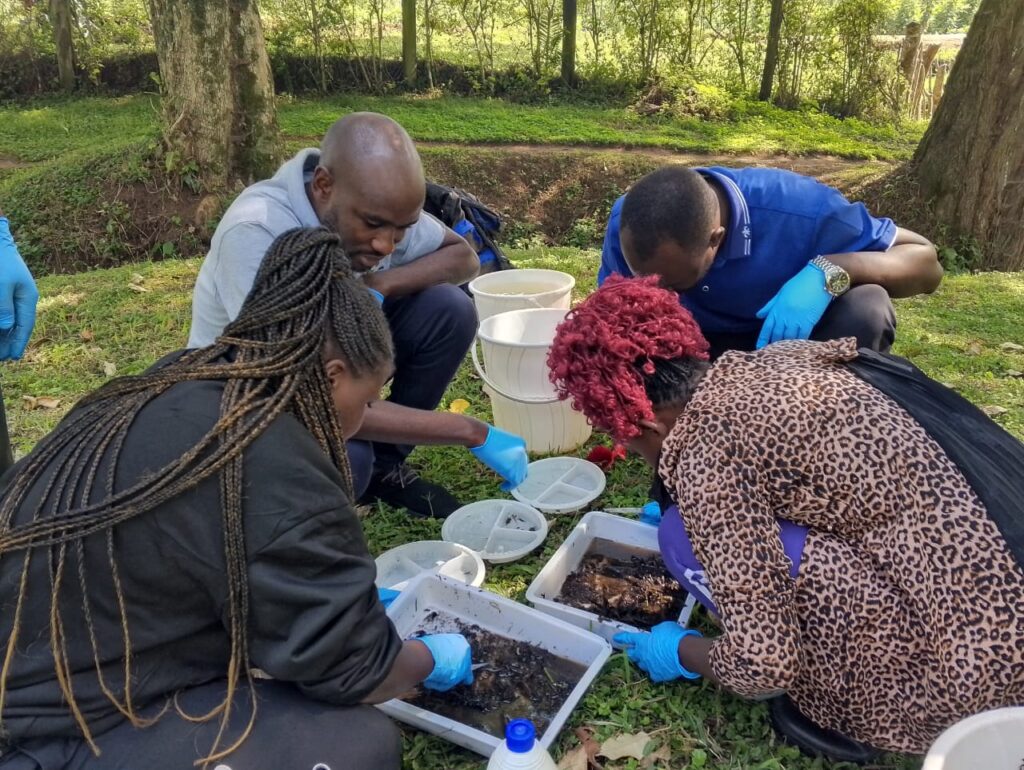
KFF will use the findings to create a simple identification key that can be used by schoolchildren, community members and local leaders to monitor water quality themselves. In this way, residents become citizen scientists and can actively participate in the protection of wetlands.

Kicknet sampling ?
Due to lack of knowledge and laboratories for testing water quality across Uganda, KFF uses the “kicknet sampling” method. This is a technique in which you stir up the bottom of shallow watercourses to catch small invertebrates.
These small animals, such as larvae, worms, snails, crayfish or shells, provide a good indication of the ecological health of water. Some can only survive in clean water, while others can tolerate slight pollution The macro invertebrates however can only remain present if the quality of the water through time remains stable and is therefore a better indicator of long term water quality. A simple water sample only provides a snapshot of the situation at a given moment.
KFF works with teams of local residents to take the samples. Through their participation, they will gain a better understanding of how human activities affect ecosystems and the organisms living in watercourses.