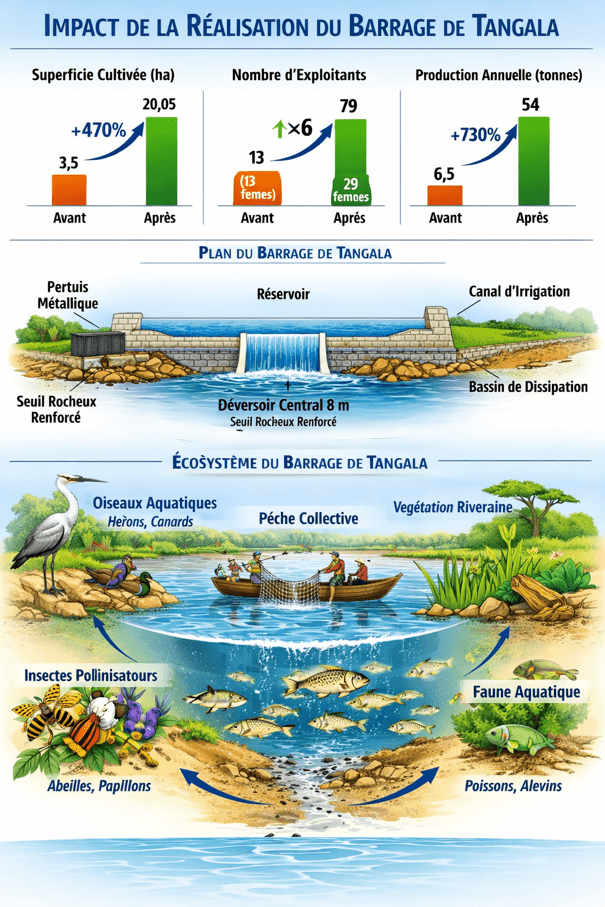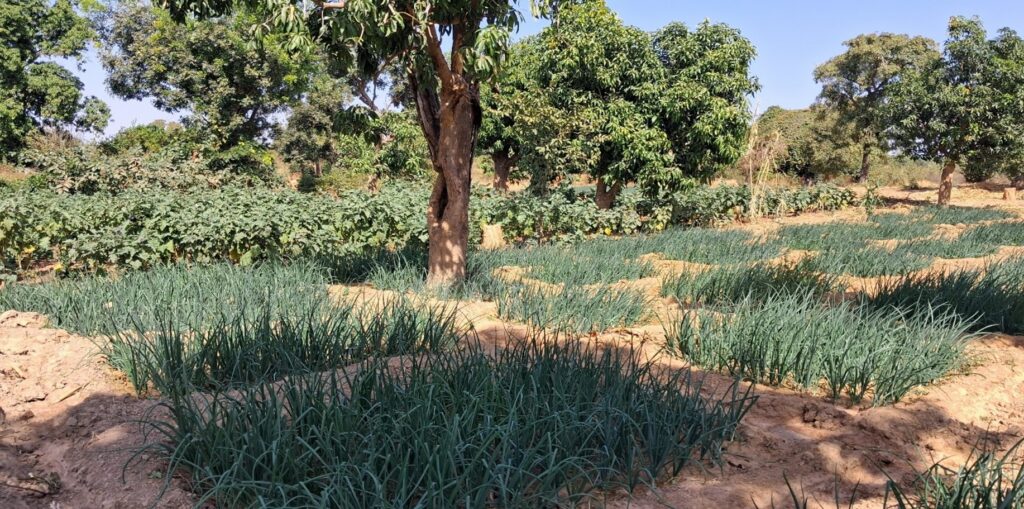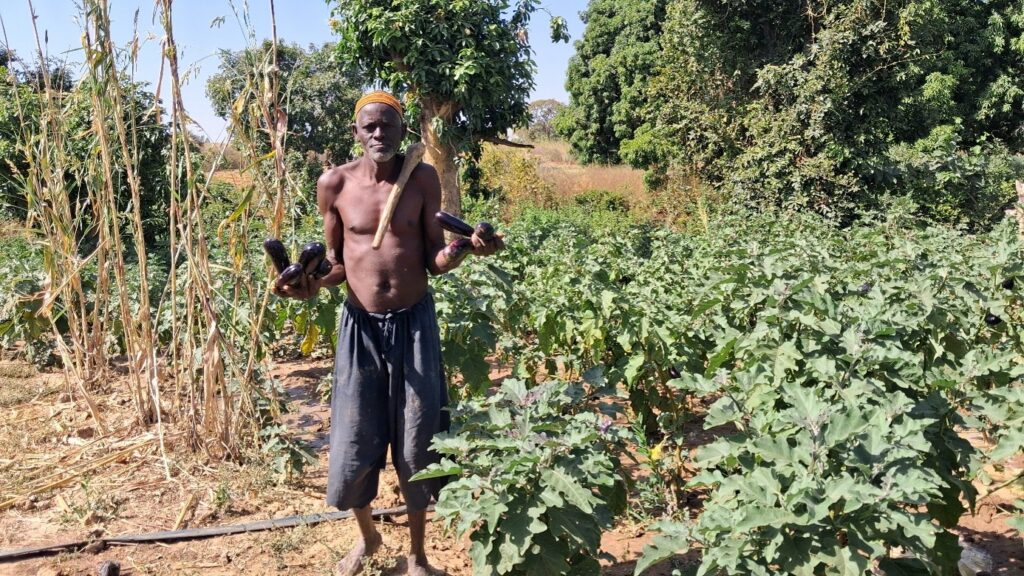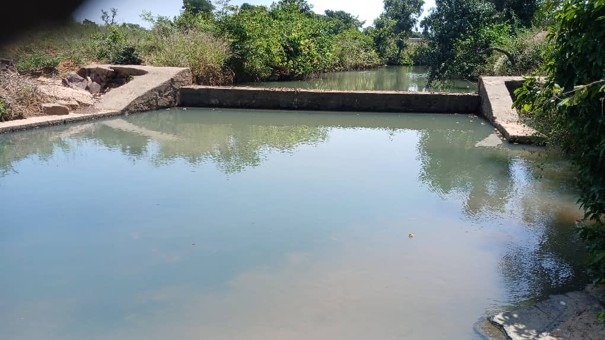
In the rural municipality of Mountougoula, water had long been the biggest challenge for farmers. In the village of Tangala, vegetable growers relied on traditional wells that would run dry just a few months after the rainy season. As a result, farming outside the rainy season was virtually impossible. Limited access to water led to low yields, small areas of cultivated land and an increasing exodus of young people to other villages in search of work.
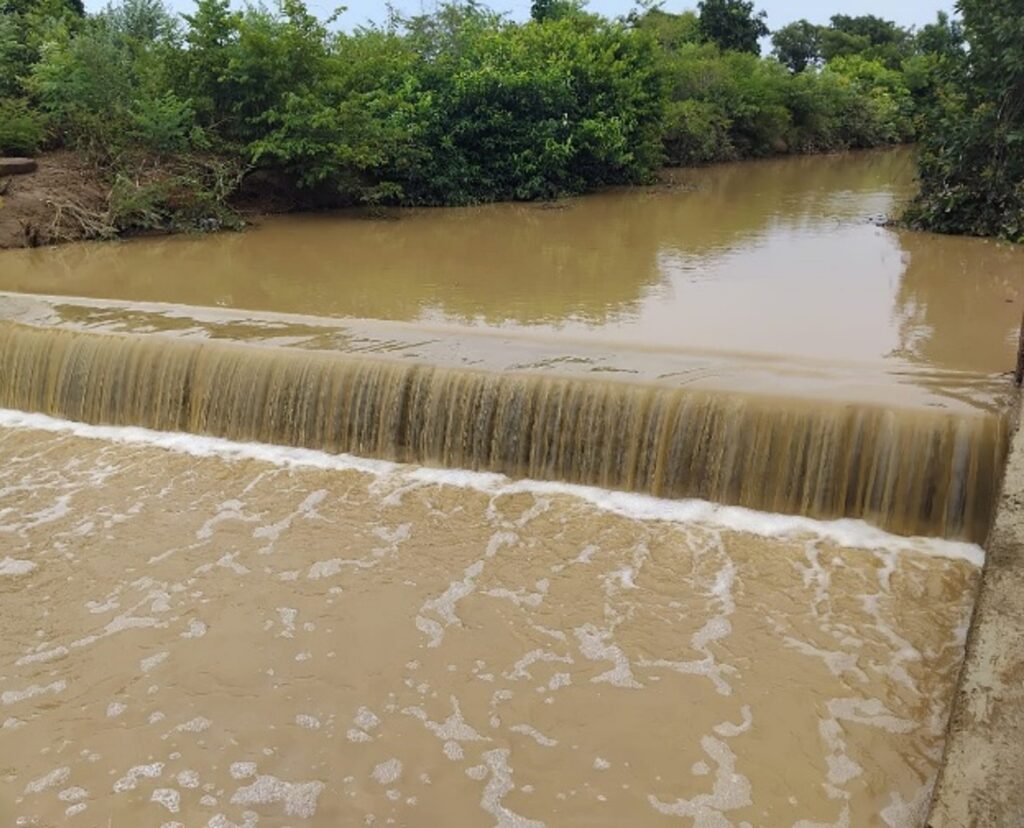
To change this situation, a small dam was built on the Tangala River. The aim was simple yet ambitious: to provide year-round access to water, make more agricultural land productive and strengthen the economic resilience of the local community.
Well thought out from design to implementation
Before work began, experts from the Institut Polytechnique Rural (IPR) in Katibougou, engineers from CSPEEDA and consultants from Join For Water carried out extensive preparatory studies. They investigated the technical, hydrological and economic feasibility of the project, identified the most suitable location for the dam and analysed potential impacts on the environment and biodiversity.
The final design comprised a dam 12 metres long and 60 cm wide, featuring a central spillway and a reinforced stone structure.
The works were carried out by a local company. In addition to the construction of the dam, irrigation channels were also built and farmers received training on the maintenance and management of the infrastructure. Throughout the process, our partner CSPEEDA oversaw the entire process and ensured that local residents were involved, so that they feel a sense of ownership of the project and can actively contribute to its sustainable management.